
The JournalEssay
When Safety Starts to Look Like Waste
The trouble with a job done perfectly: when nothing goes wrong for four decades, a council reads it as proof there was never anything to guard against.
7 min read · Published 18 September 2026

The claim
Protection that works perfectly leaves no evidence it was needed — the catastrophe it prevented never happens where anyone can see it, so the only thing left to see is the cost of keeping the guard on duty, and mistaking that cost for waste is the most common way real safety gets cut.
Protection that works leaves almost no evidence behind. The break-in that never happens, the fire the sprinkler system was never tested against, the ambush that dissolves before it starts — none of these produce a photograph, a receipt, or a headline. What does produce a receipt is the guard's wage, the insurance premium, the extra minute at the door. This is the prevention paradox: the better a safeguard works, the more completely it erases the proof that it was ever necessary, until the only visible fact left is its cost. Call something that succeeds this quietly waste, and the mistake is simple to name — the absence of disaster has been read as the absence of danger.
Stated as a rule rather than a scene: a safeguard's success is invisible by construction, because success means the thing it guards against never happens where anyone can watch it not happen — while the safeguard's cost stays stubbornly visible on every ledger that tracks it, whether or not the danger it answers is still real. The two facts sit side by side and get compared as though they were equivalent, and that is exactly where the paradox does its damage.
A valley town's own record shows exactly how this happens. A man named Aram climbed seventy-one stone steps every evening for forty years, staff in one hand and lamp in the other, and walked a wall no enemy had come near in all that time. Below him, every evening, the same ordinary things kept happening: bread cooling on the sills, sheep folded in for the night, a town settling toward sleep the way it had settled every evening before. The town slept the sleep of people who have forgotten why they sleep so well. And more than one voice on the council, kindly enough, had begun to say what the ledger seemed to prove: that a wall with no enemy needs no keeper — only a good lock.
Nothing in the council's reasoning is stupid, or even unusual. Forty years of a threat not arriving is, from inside a ledger, indistinguishable from forty years in which the threat never existed at all. The keeper's entire record consists of nights when nothing happened — which is also exactly what a keeper who was never needed would produce. No line item separates "guarded and safe" from "never in danger." Both look, on paper and from the street, like the same unbroken quiet.
This is not a failure of the council's arithmetic; it is a limit of what arithmetic can see. A budget is built to weigh things that show up in it, and a wall that keeps working shows up in exactly one place on that budget: the keeper's wage, paid out on schedule whether or not the night ever asks anything of him. Every other year, some other need on the same ledger will point to a real, countable, present cost — a bridge that needs repair, a granary that needs raising — and against those, forty years of nothing happening will keep losing the argument, not because it deserves to, but because it is structurally unable to enter the argument as anything other than an expense with no return anyone can point to.
This is worth naming plainly, because it explains a failure that recurs everywhere protection exists. A working safeguard produces two kinds of information, and only one of them survives long enough to be counted. The catastrophe it prevents happens nowhere — not quietly, not off to the side, but nowhere, in the strict sense that nothing occurs for anyone to record. The safeguard's upkeep, by contrast, happens somewhere specific, on a schedule, at a price, every single time. A budget that weighs these two facts against each other is weighing a number against a blank, and a blank always looks smaller. Records were built to hold events, not their absence; asking a ledger to credit a disaster for not occurring is asking it to do something no ledger anywhere was designed to do.
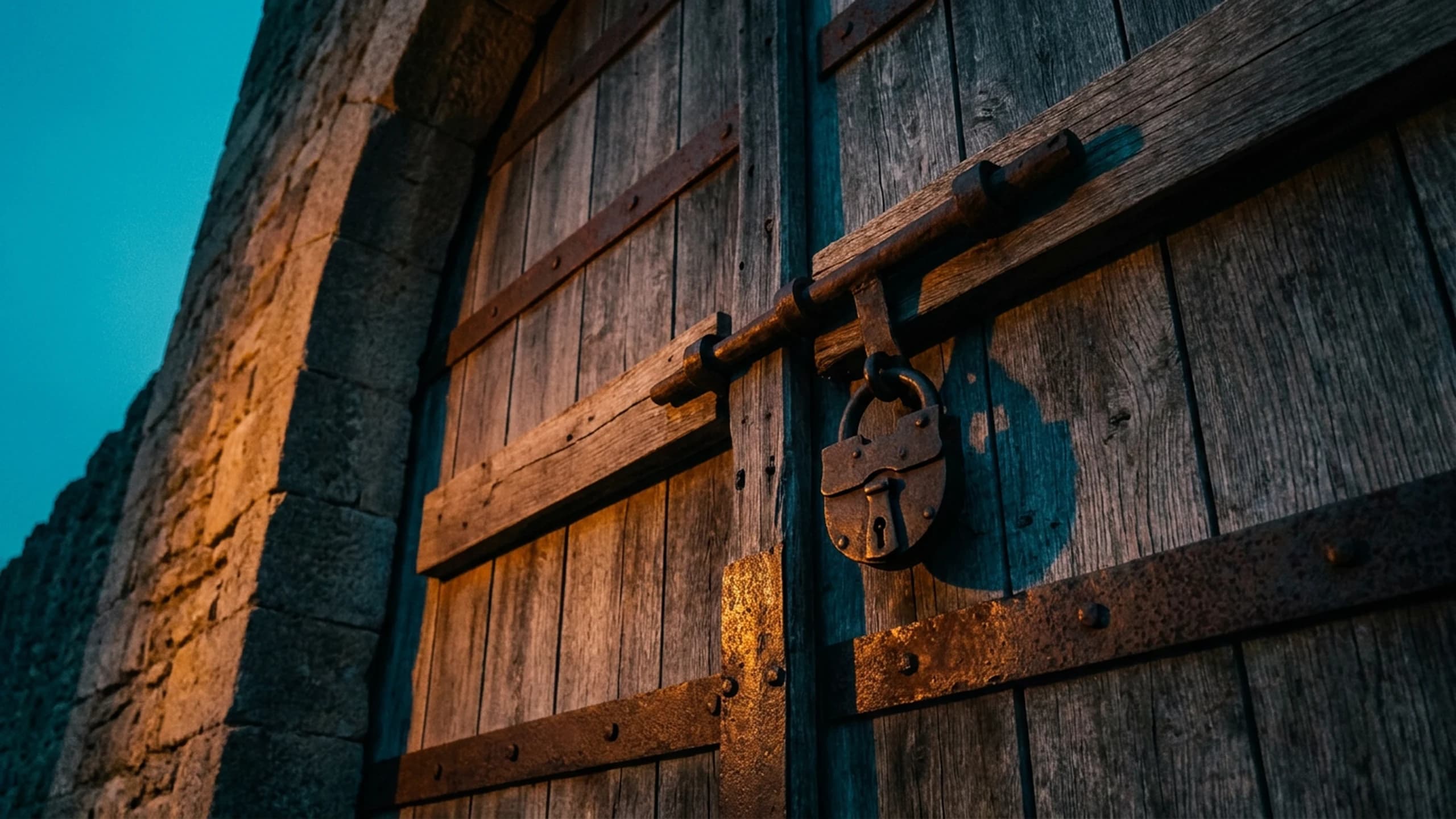
The mistake has a less obvious twin, and naming only one half of it would be its own kind of dishonesty. Not every unthanked precaution is quietly doing its job; some of it is doing nothing at all, kept on out of habit or liability rather than any threat still worth answering. A lock added to a door that was never actually at risk is not vigilance — it is decoration wearing vigilance's clothes, and it is just as invisible as the real thing, for the same reason: nothing happens either way. A drill nobody takes seriously, a checklist signed without being read, a warning notice long since faded past legibility — these cost almost nothing to keep and produce the same reassuring silence a genuine safeguard produces, which is exactly what makes them so easy to mistake for one. Telling the two apart is not a matter of trusting every guard by default. It is a matter of being able to say, honestly, what specifically would happen without this one — and if no one can answer that, the paradox has run out, and what remains really might be waste.
The keeper's ledger is everyone's ledger. It is the backup system nobody has ever had to restore from, quietly renewed every year by someone who has never watched it fail and cannot prove, to a budget committee, that it ever will. It is the security team whose calmest year becomes the argument for cutting its headcount, because a calm year and an unnecessary team produce the identical report. It is the smoke detector whose battery someone keeps replacing in a building that has never once caught fire, and the maintenance crew whose entire visible output, most years, is a clean inspection form. It is the parent who checks a sleeping child's breathing once more before finally going to bed, on the ten-thousandth uneventful night in a row — and if you have ever kept a habit alive long after its own evidence dried up, you already know how it feels to defend a choice that has nothing left to show for itself but its own continuation.
None of this argues for keeping every precaution forever, and pretending otherwise would be its own comfortable lie. Some watches genuinely do end — a threat recedes, a risk retires. What the paradox asks for is not permanence. It asks that the emptiness of a ledger be read correctly before anyone decides what it means: an empty ledger can mean nothing was ever there, or it can mean someone has been standing between the ledger and the thing it would otherwise record. The two look identical from outside, and only one of them is safe to close. The honest way to tell them apart is not a feeling but a question, asked plainly and answered out loud: if this were taken away tonight, what, specifically, would be different by morning? A council that can answer that question in detail is looking at a real risk that has simply gone quiet for now. A council that cannot answer it at all may, in fact, be looking at genuine waste — and owes itself that harder, more honest look before it reaches for the lock.
Aram never had the chance to answer that question for his own council, and the story does not pretend he needed to — it simply lets us watch what forty years of an unanswered ledger looks like from the outside: fond regard, mild condescension, and a quiet, reasonable plan to replace a man with a lock. Nothing in that regard is cruel. It is only what a ledger produces when it is never asked the harder question.
Judged by its receipts alone, the best-run protection in the world will always look like the easiest expense to cut — not despite doing its job, but precisely because it is doing it.
The town only slept — safely — inside a choice one unseen man made in the cold.
The keeper who kept this ledger has his own tale — The Keeper of the Wall, S01E01.

Watch the tale this pattern comes from
The Keeper of the Wall
Season 1 · Episode 1Watch now →


The next tale or reflection, by email
One email when a new tale or reflection is ready. No noise.
Questions
- What is the prevention paradox?
- The better a safeguard works, the more completely it erases the proof it was necessary. The disaster it prevents happens nowhere, while its cost stays visible on every ledger — so successful protection ends up looking like pure expense.
- Why does successful prevention look like waste?
- Because forty years of a threat not arriving looks, from inside a ledger, identical to forty years in which the threat never existed. No line item separates "guarded and safe" from "never in danger" — both read as the same unbroken quiet.
- How do you tell real protection from useless precaution?
- Ask, honestly, what specifically would happen without it. A safeguard answering a real risk has a concrete answer; a lock kept out of habit has none. If nobody can say what it prevents, the paradox has run out — and it may really be waste.
- Should every safeguard be kept forever?
- No. Some watches genuinely end — a threat recedes, a risk retires. The paradox only asks that an empty ledger be read correctly first: emptiness can mean nothing was ever there, or that someone has been standing between the ledger and the event.